30+
Automated businesses
running efficiently on cores we have built
10000
Documents processed
daily by orchestrating B2B services
5TB
of data generated daily
by end users, web services, and business analysis software and handled by distributed cloud file systems
1000+
Concurrent users
using our systems daily
Document Management System — A Framework for Any Business
We specialize in the creation of effective electronic document management systems, full business process automation, safe integration with B2B services to ensure easy access, and the processing of key company data. In every project we work on, development and implementation of complex solutions are based on the requirements of the particular customer. As a result, the CRM-systems we create become the key element of the customer's business, forming the basis for rapid sales growth and improving the service quality for end users.
Business Cases:

Who
Booking Group is an expert company in the car rental business and is included in the world's top ten car rental companies. The company's product — the website EconomyBookings.com — is one of the major sites providing a high-quality online booking service for car rentals.
Task and Solution
Booking Group needed to automate the sales processes for thousands of daily users. Our company created an electronic document management system to process customers' reservations, which could automate the process of car booking for over 1,000 suppliers starting from scratch. We fully automated the communication between the customers and rental companies, and our CRM-system has become the major business engine. Under the project, our company also ensures day-to-day operation of the key processes of Booking Group's IT department.
Who
TrialCard is an American supplier of solutions in the healthcare industry and one of the leading medicine promoters in the US market. Being in between the largest pharmaceutical companies and end users (doctors, pharmacists, and patients), TrialCard offers automated solutions for data exchange between all chain participants, from manufacturers to buyers of the medical products.
Task and Solution
The complex document management system decreased the productivity of the TrialCard employees and slowed down the whole work process. With the aim to improve work efficiency, we created a CRM-system that automates work with documents, recipe data, pharmacy requests for medicine, and payments. The system has not only improved the company's business processes but has also become a vital link in the production chain. Our specialists provide long-term support and are constantly improving the user experience.

Who
Nordea is one of the largest banks in Northern Europe. In 2017, Nordea merged its Baltic operations with DNB to form Luminor Bank, which has since become a major independent financial institution in the Baltic States, now owned by Blackstone.
Task and Solution
Nordea's Baltic division managed a complex structure of internal and external document flows across multiple financial processes. The bank required a modern search engine capable of locating the right files among millions of electronic documents of different types. Our company built a document indexing and metasearch system that dramatically reduced lookup times and became an essential tool for daily operations across the bank's departments.

Who
Iizi is one of the leading insurance brokers in Latvia and is included in the top three insurance brokers in the Baltic States. Iizi is the intermediary between insurance companies and their existing and potential customers, offering modern and easy-to-use insurance products for movable and immovable property, health, and travel.
Task and Solution
The key to Iizi's business is an electronic document management system that automates the company management business processes and the information exchange between its customers and the insurance companies. Our company provided the development and long-term support of the systems that ensure the daily work of dozens of employees who provide quality services in the field of insurance of customers' life and property.
Who
Interfleet is an enterprise fleet leasing management platform built for Interleasing by Santander, a Switzerland-based fleet services provider. The platform serves fleet managers, suppliers, insurers, and contract owners — managing the full lifecycle of commercial vehicle contracts from onboarding and configuration through to invoicing, supplier coordination, and document management across a large, multi-party network.
Task and Solution
The client needed a platform capable of replacing fragmented, manual processes across dozens of integrated parties — without rebuilding it every time a new client or supplier was onboarded. Our team delivered the complete solution: architecture, backend services, front-end experience, and AI integration. We built an AI-powered invoice processing pipeline that reads, extracts, and validates supplier invoices automatically. Invoices that previously required manual receipt, data re-entry, approval routing by email, and filing are now handled end-to-end by the platform — with minimal human involvement. For an operation processing hundreds of supplier invoices per month, this translates directly into lower administrative cost, faster cycle times, and fewer errors. Alongside this, we designed and built a configurable workflow engine that coordinates tasks, documents, and approvals across internal teams, suppliers, and clients automatically. New business processes are onboarded through configuration rather than custom development, meaning the platform scales across clients and use cases without proportional increases in engineering effort. The front-end supports a multi-tenant SaaS model where internal teams and external partners work within the same platform, each governed by a role and permission system that controls access at a granular level. New users, suppliers, and client organizations can be onboarded without structural changes to the platform.
 Confidential Baltic manufacturer
The customer chose to protect their confidential information.
Who
A food manufacturing and distribution company in the Baltic States, running a sales organisation of field representatives on top of a long-established accounting and ERP environment.
Task and Solution
The commercial data the business needed — customers, orders, sales-agent activity, performance — already existed in the ERP, but it was hard to reach and harder to analyse. We audited the sales process and the legacy database, then built an automation and reporting layer around the ERP instead of replacing it, so the company gained visibility without a risky, expensive migration.
Read the full case studyAutomating sales operations around a legacy ERP
- Industry
- Food manufacturing and distribution
- Engagement
- Process audit, legacy integration and sales automation
- Starting point
- Commercial data locked inside a long-established ERP, reported by hand
- What we changed
- An automation layer around the ERP that consolidates the data and produces the reports itself
- Business result
- Management sees sales activity as it happens; the team spends its time selling
- Proof point
- Core ERP untouched · read-only first integration
- 3 days → 15 minTo produce the monthly management report
- 11 h → 3 hWeekly admin time per sales representative
- 1,400Accounts with no contact in 90 days, previously invisible
- €410,000First-year revenue from reactivated accounts
- 5 monthsPayback on a €48,000 build
- €600,000+ERP replacement avoided
Indicative figures. Exact numbers are covered by the client agreement.
The challenge
The company's sales operation ran on a long-established accounting and ERP environment. Everything management wanted to know about customers, orders and sales-agent activity was already in there, and getting it out took a person and a morning.
Managers worked from fragmented reports that someone assembled by hand. Sales representatives spent their week collecting information instead of visiting customers, and nobody could say what the team had covered or which accounts had gone quiet.
A full ERP replacement had been quoted at over €600,000 and would have taken the sales operation offline during the switch. The audit showed it was also unnecessary.
What Binitex did
We audited the sales processes, data flows and legacy database before proposing any change, then built an automation layer around the accounting platform rather than replacing it.
- Connecting to the existing ERP and accounting data
- Consolidating customer, sales and employee-activity information into one view
- Automating the preparation of operational and management reports
- Creating clear visibility into sales-agent activity and customer relationships
- Identifying process bottlenecks and duplicated manual work
- Designing improvements that could be introduced gradually, without disrupting production systems
- Keeping the first integration primarily read-only to reduce operational risk
Business impact
The monthly management report dropped from three days of manual assembly to fifteen minutes, and admin time per sales representative fell from about eleven hours a week to three. Each person on the road got a day and a half back every week.
Once the data sat in one place, 1,400 accounts turned out to have gone 90 days without contact. The company was paying to win those customers and then losing them without noticing. Bringing them back accounted for about €410,000 of revenue in the first year.
The build cost €48,000 and paid for itself in five months. It also settled the ERP question, which had been hanging over the business for two budget cycles.
Modernised the sales operation without replacing the company's core ERP.
Confidential US healthcare technology companyThe customer chose to protect their confidential information.
Who
A US healthcare technology company whose workforce scheduling platform is business-critical software for the clinical organisations that run on it.
Task and Solution
Years of product growth had left a complex legacy system that was increasingly risky to change. We audited the architecture and the delivery process, then modernised the platform incrementally — separating business logic, adding automated testing and release safeguards, and moving system knowledge out of a few specialists' heads — so the whole product team could ship faster and with more confidence.
Read the full case studyModernising a healthcare workforce platform
- Industry
- Healthcare workforce management
- Engagement
- Legacy-system modernisation and delivery-process improvement
- Starting point
- A business-critical platform that had become slow and risky to change
- What we changed
- Rebuilt a piece at a time, with tests and releases that catch mistakes first
- Business result
- Engineers spend their time on features instead of firefighting
- Proof point
- No big-bang rewrite · knowledge spread across the team
- 6 weeks → 4 daysFrom agreed change to live release
- 9 days → 6 hManual regression testing per release
- 23 → 5Production incidents per quarter
- 65% → 30%Engineering time spent on maintenance
- 6 h → 25 minTime to diagnose a production issue
- 3 months → 3 weeksFor a new engineer to ship safely
Indicative figures. Exact numbers are covered by the client agreement.
The challenge
The client runs a workforce scheduling platform that clinical organisations depend on to staff their shifts. Years of product growth had left a system that got harder to change with every release.
New features took longer to deliver, each release needed nine days of manual testing, and developers spent their time tracing dependencies and fixing regressions instead of building.
The company could not answer customers as fast as it wanted to, and could not take the product into new segments without adding risk it could not carry.
What Binitex did
We audited the architecture and the development workflow, then modernised the system a piece at a time instead of rewriting it.
- Mapping critical workflows and technical dependencies
- Identifying performance bottlenecks and high-risk legacy components
- Separating business logic into more maintainable services
- Improving integrations with healthcare and enterprise systems
- Introducing automated testing and more reliable release processes
- Improving monitoring and production diagnostics
- Simplifying development workflows and removing repetitive engineering work
- Transferring system knowledge across the team instead of leaving it with a few specialists
Business impact
The release cycle dropped from six weeks to four days. The manual regression pass before each release fell from nine days of QA effort to about six hours, production incidents went from 23 a quarter to 5, and working out what had gone wrong took 25 minutes instead of six.
Maintenance took 65% of engineering time before the work and 30% after. That moved several engineers off firefighting and onto features customers had asked for, without hiring anyone.
A new engineer now ships changes safely after about three weeks instead of three months, because the system's behaviour is written down and enforced by tests rather than held by two or three specialists.
The whole product team can now change the platform without holding its breath.
Every case here started as one expensive job somebody was doing by hand.
Show us yours. In two weeks we put a number on what it costs you today and what it looks like once it runs itself — at a fixed price, and the report is yours either way.
Find the expensive job in your businessTell Us About Your Project
We’ll help you figure out the best way to bring it to life.
Email Us
alex@binitex.comWe respond within one business day.
Offices
Daugavpils, Latvia
Riga, Latvia
Send a Message
Book a Meeting
Schedule a 30-minute video call with our CEO to discuss your project.
Book a 30-Min CallFrequently Asked Questions
What types of business processes can Binitex automate?
Binitex automates document management, CRM workflows, B2B service integration, reservation processing, healthcare document workflows, and financial document indexing. Our systems process over 10,000 documents daily and support 1,000+ concurrent users.
Which companies use Binitex business automation solutions?
Our clients include Booking Group (travel reservation processing), TrialCard (healthcare CRM automation), Nordea/Luminor Bank (document indexing for millions of records), and Iizi Insurance (broker-partner document management).
How does Binitex handle large-scale document processing?
We use distributed cloud file systems, B2B service orchestration, and load-balanced architectures. Our platforms handle 5TB of data generated daily, process 10,000+ documents through automated workflows, and serve 30+ automated businesses.

High-level expertise in car rental business goals and ways to achieve them

Insurance industry leading solutions
Responsible for the full stack of vehicle, health, real estate and travel insurance policy issuing process starting from e-commerce frontend, providing best offers on market, and ending with complex backend solutions for automating the processes of communicating to insurance and financial institutions.

End-to-end platform development for property management, digital rights verification, and real estate technology ecosystems

Public transportation solutions
Real-time fleet tracking, route optimization, and parent notification systems for school transportation management at scale

Award-winning mobile apps for music learning — 2M+ downloads, Product Hunt awards, and available in 28 languages across iOS, Android, macOS, and Windows

A SaaS platform that creates one-of-a-kind illustrated storybooks where every child becomes the hero of their own adventure

Full-stack development of trading platforms, gold-backed banking apps, property investment exchanges, and social insurance products for the UK fintech market

Long-term development and support of POS systems, e-commerce platforms, and integrated management software for retail chains and entertainment venues
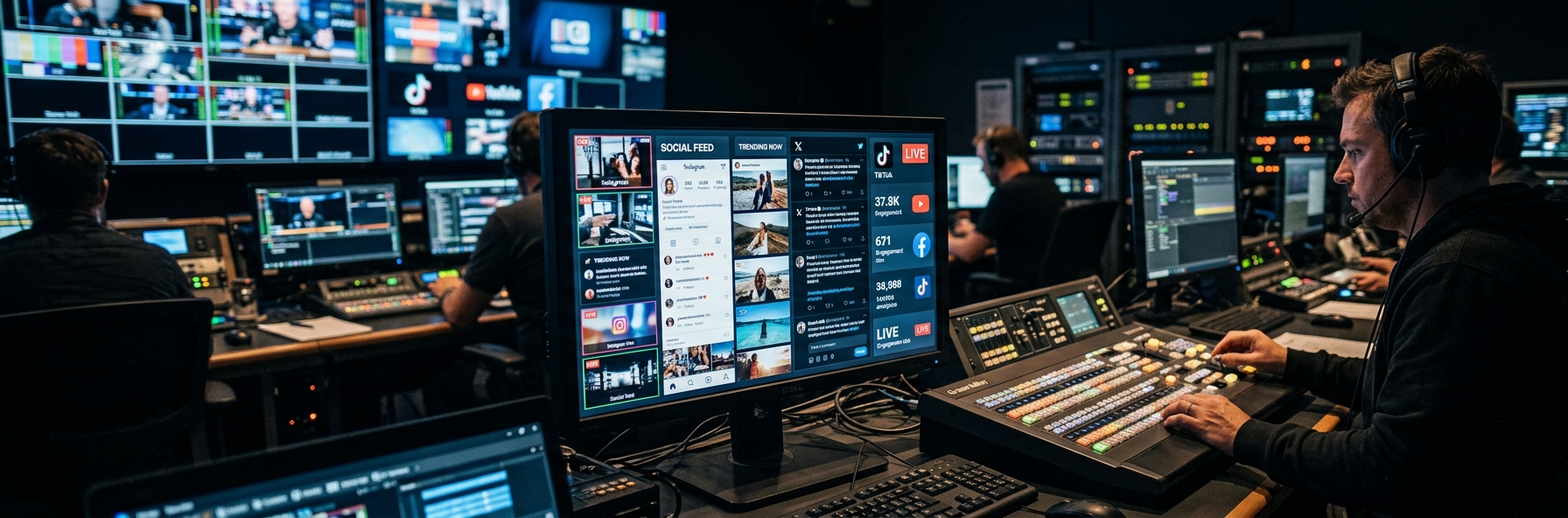
Social TV platforms for broadcasters and digital experiences for international art and cultural events

Continuous performance monitoring, anomaly detection, and visualization for industrial control systems and process environments